
Building climate-smart communities designed for Africa’s future.
Designed With Love, Built To Last
Phioneers is a purpose-driven development initiative building sustainable communities using climate-smart design, locally sourced materials, and renewable systems.
Through the DWLBL model, we combine innovation in construction with community-centered development to create homes and communities designed to thrive for

The Challenge
Africa’s Housing Challenge
Across Africa, millions of families face a growing housing challenge driven by rapid urbanisation, climate vulnerability, and rising construction costs.
Many communities lack access to housing that is both affordable and resilient to environmental conditions.
Traditional construction methods often rely heavily on cement and imported materials, which increases costs and carbon emissions while limiting scalability.
As populations grow and cities expand, the need for sustainable, resilient, and affordable housing solutions continues to increase.
A new approach is needed.

DWELLABLE
THE SOLUTION
Designed With Love, Built To Last
DWLBL is Phioneers’ climate-smart housing model designed to build sustainable community clusters using local resources and renewable energy systems.
The model combines thoughtful architectural design with responsible building methods to create homes that are durable, efficient, and suited to local environments.


Community-centered planning
Solar energy systems
Water harvesting infrastructure
Locally produced compressed earth blocks
Climate-adapted housing design
BUILDING COMMUNITIES, NOT JUST HOUSES
Rather than constructing isolated homes, Phioneers focuses on community clusters designed to support sustainable living environments.
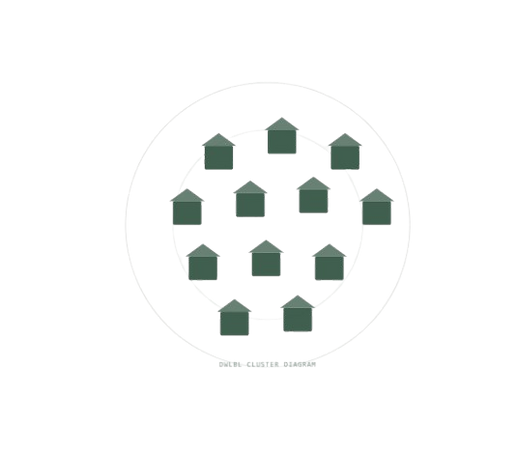
Each DWLBL cluster typically includes:
-10–12 housing units
-Shared solar energy systems
-Water supply and storage infrastructure
-Landscaping and green spaces
-Infrastructure designed for long-term sustainability
IMPACT SNAPSHOT
Measurable Impact Per Community Cluster
Each DWLBL community is designed to generate environmental and economic impact through sustainable construction methods and local workforce participation.
10–12
Homes Built
50–70
Lives Improved
40–60
Local Jobs Created
120–180
CO₂ Emissions Avoided
100%
Solar-Powered
IMPACT EXPLAINED
Carbon Reduction
Traditional cement-heavy construction generates significant carbon emissions due to cement production and transportation.
DWLBL homes use locally produced compressed earth blocks and climate-smart construction methods, significantly reducing embodied carbon.
Estimated impact per cluster:
120 – 180 tonnes CO₂ avoided
This comes from:
Reduced cement usage
Locally sourced materials
Lower transportation emissions
Energy-efficient design
Solar-powered infrastructure
Equivalent to removing 30–40 cars from the road for one year.


WHY SENEGAL
Senegal was chosen as the launch location for the first DWLBL community because of its strong potential to support sustainable development initiatives.
Political Stability
Political stability and strong regional leadership
Rapid Urbanization
Growing urban population and housing demand
Community Networks
Government commitment to renewable energy and sustainable development
Strategic Location
Access to local construction materials and skilled labour
Senegal also serves as a strategic gateway to West Africa, making it an ideal starting point for demonstrating a scalable model that can expand across the continent.

THE FIRST COMMUNITY — SENEGAL
Phioneers is preparing to launch the first DWLBL community cluster in Senegal.
This pilot will demonstrate how climate-smart housing can be delivered using local materials, renewable energy systems, and community participation.
The project will serve as a proof of concept for scaling sustainable communities across Africa.